
The Spring Festival Event That Dawned a New Tech Era
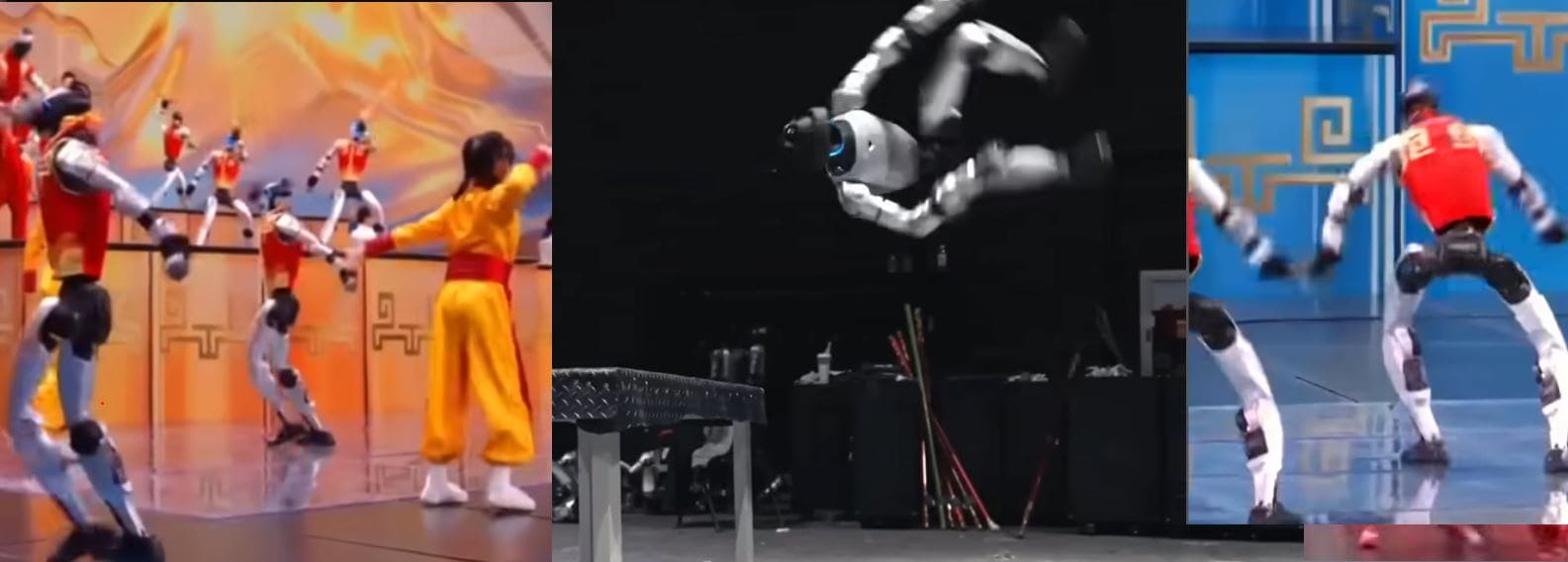
World's greatest spectacle was held on China's Spring Festival Gala and this may go down as one of the most historic robot performances ever broadcast on live television. The performance given by Humanoid robots took everybody by shock. This is not to say the panic button pressed by CNN and ABC Australia who started exhibiting chaotic frenzy in every jot they uttered about the event. For these Robots just didn't stand and shaked or simply walked and waved, they flipped, they spun, they even balanced on one leg. They performed kung fu. They wielded nunchaku. They executed full sword choreography. All of it perfectly synchronized, flawlessly timed, and broadcast live to one of the largest TV audiences on Earth. At the center of this technological marvel stood Unitree Robotics, driving humanoid robotics into territory that, until recently, was merely seen on TV and considered almost impossible. What truly sets this performance apart, what makes it nothing short of mind-blowing, isn’t just the spectacle unfolding before our eyes — it’s the sheer impossibility of how it came to be. From the very first moment, it became painfully clear: this wasn’t some pre-programmed dance. No. These robots didn’t just move; they breathed. Their steps pulsed with rhythm, their posture was fluid and graceful, their transitions seamless — as if they were born to perform. In an instant, the illusion was complete: they weren’t machines. They were living, breathing performers, defying everything we thought possible.
Breaking Boundaries: The Unbelievable Aerial Feat of Humanoid Robots – The Balance That Awed Everyone
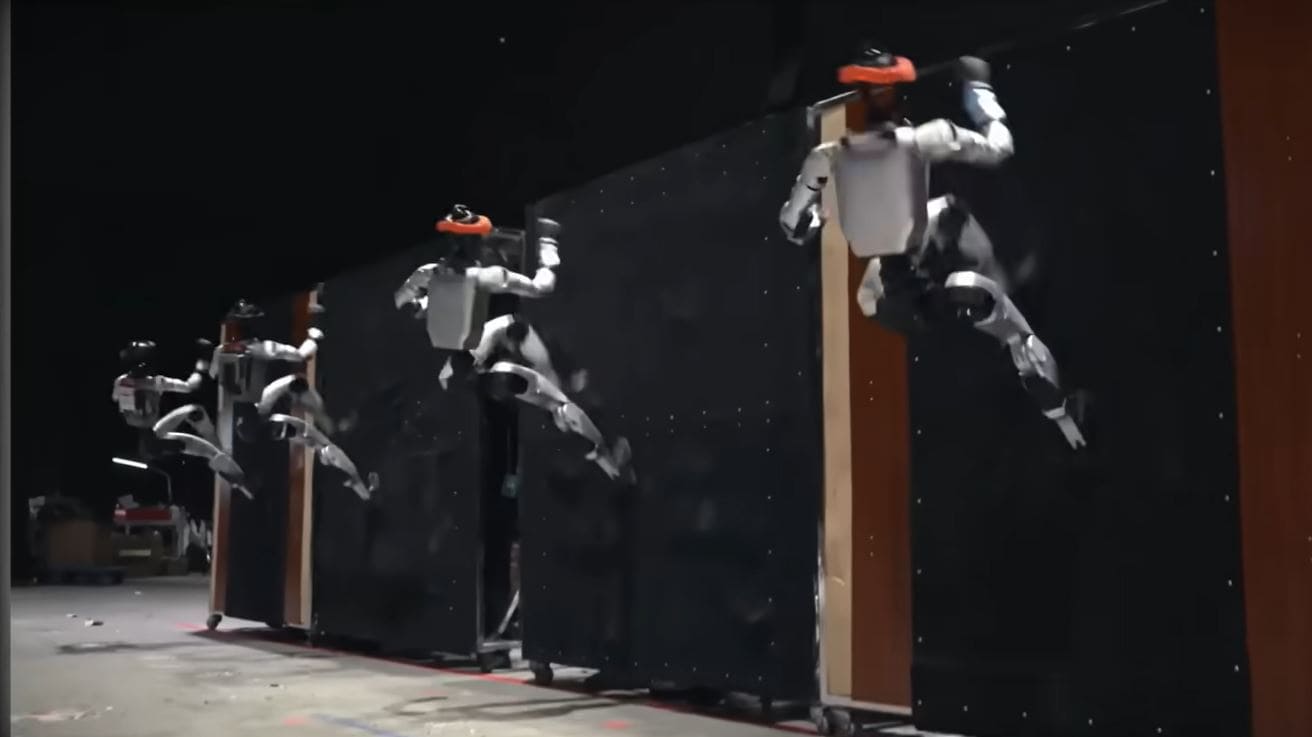
Each footstep was a symphony of precise balance, constant microcorrections, and flawless motion planning — a testament to the raw power and elegance of these machines. But then came the moment that left the audience breathless. The aerial flips. One by one, the robots launched into the air, defying gravity itself, twisting and spinning mid-flight with the grace of acrobats. They completed full-body rotations, defying all logic, and landed with surgical precision, as if it were second nature — flowing effortlessly into the next breathtaking move. This wasn’t just a stunt. This was one of the most complex challenges in humanoid robotics. In midair, a robot loses its ground reference, visual stability, and predictable motion — the very pillars that keep it grounded. Yet, these machines defied the odds, calculating body orientation, joint rotation, momentum, and landing angle all within milliseconds, with stunning accuracy. One tiny miscalculation, one fleeting error, and it would all fall apart. But they didn’t falter. Instead, they landed with the confidence and stability of seasoned athletes, displaying unmatched speed and control. This single act wasn’t just a victory in robotics. It was a massive leap forward in real-time motion control, one that redefined what we thought was possible in the realm of humanoid technology.
Elegance in Combat: The Unforgettable Sword Dance and Martial Arts Performance
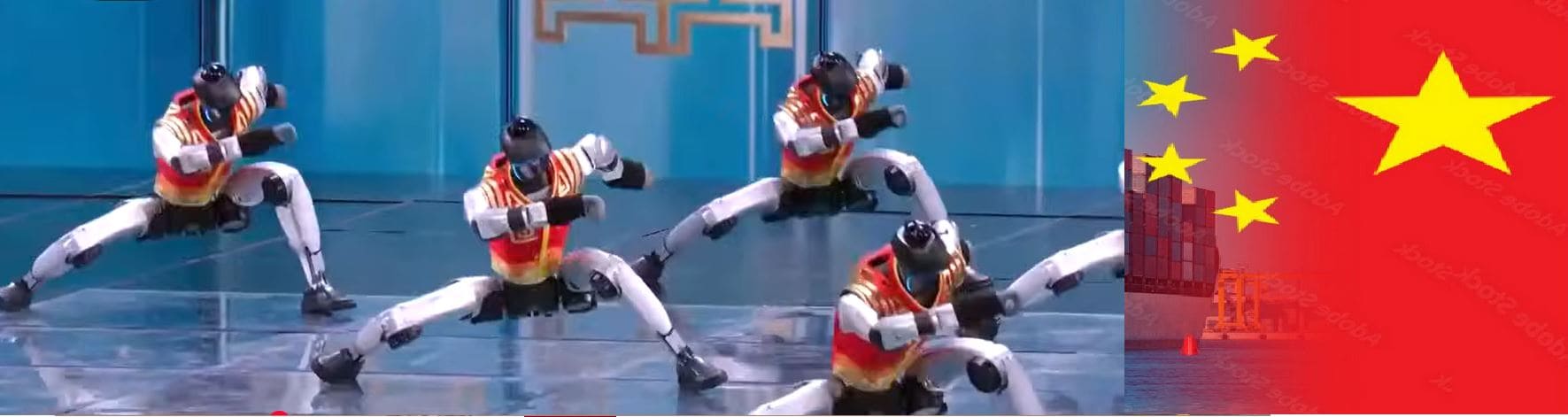
The choreography then escalated into a full martial arts performance. Punches, blocks, stances, transitions, and spinning kicks were executed with a precision that exuded both speed and rhythm. But what truly made this performance extraordinary wasn’t just the accuracy—it was the timing. The robots moved in perfect harmony with the musical beats, showcasing advanced motion prediction and unprecedented synchronization. This was no longer just robotics; this was performance art in its purest form.
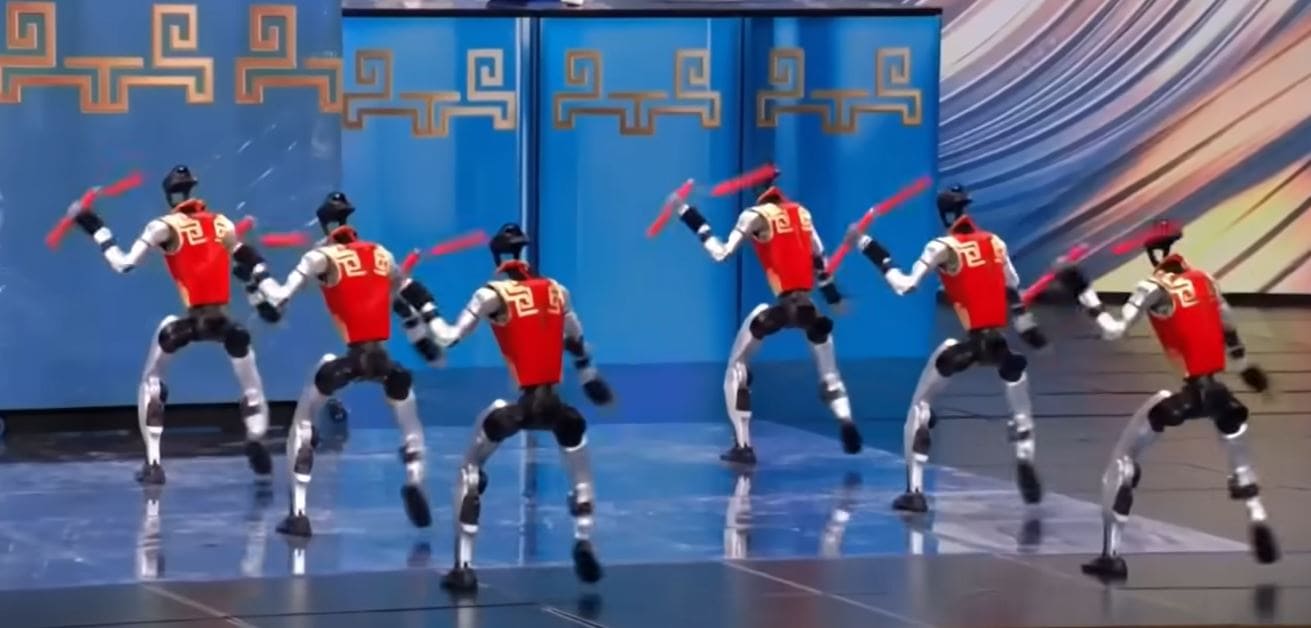 The moment that truly went viral, however, was the Nunchaku routine. Handling nunchaku is brutal, even for seasoned martial artists. It demands lightning-fast wrist speed, momentum tracking, spatial awareness, and flawless timing. Yet, the robot spun the weapon with fluidity, redirected its momentum effortlessly, unleashed rapid strikes, and recovered instantly—without a hint of imbalance. This level of dynamic tool control marks a monumental milestone in the evolution of robotic dexterity.
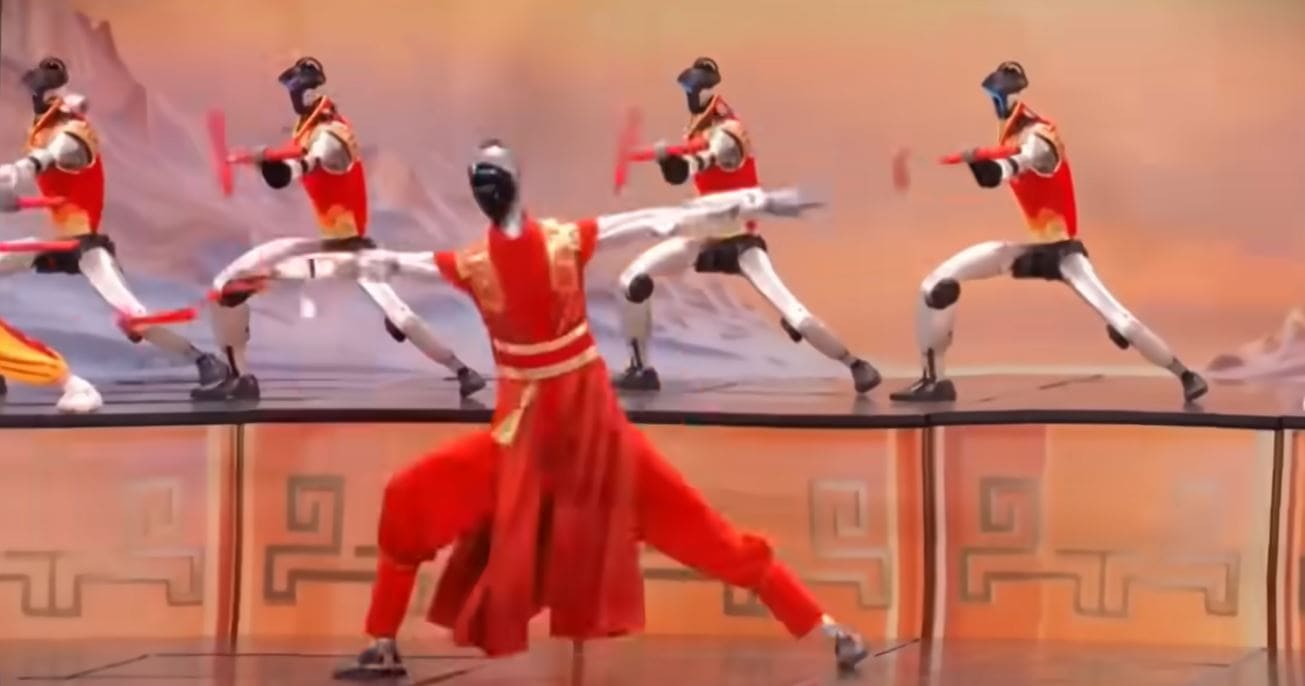 The visual climax of the entire performance arrived when the kung-fu master stepped forward for the sword dance. This wasn’t the stiff, mechanical movement one might expect from a robot—this was pure elegance in motion. Spinning cuts, flowing transitions, circular slashes, and seamless motion chains unfolded effortlessly. The blade seemed to become an extension of the robot's arm—precise, fluid, and perfectly controlled.
Each swing demanded micro-level wrist articulation, force modulation, and flawless trajectory planning. Rather than the rigidity typical of machines, the sword flowed as if guided by the hand of a disciplined martial artist. It was both technical and artistic, seamlessly blending precision and grace—an unforgettable spectacle.
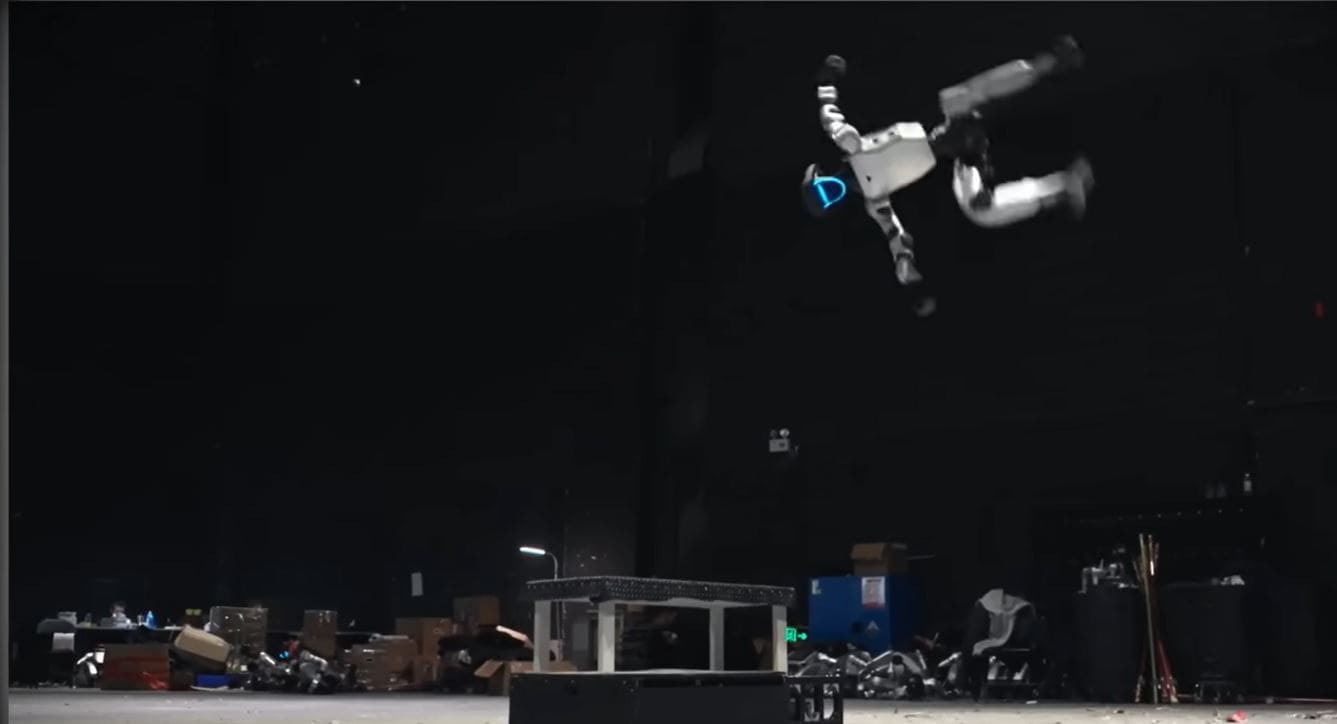
Now, here's where things get truly mind-blowing. In an unprecedented move, Unitree did the unthinkable: instead of keeping their groundbreaking technology hidden behind closed doors, they opened the curtain and released exclusive behind-the-scenes footage of the training process that powered these robots’ extraordinary live performance. And what’s revealed is just as remarkable as the final show itself.
The journey begins with the brutal fundamentals: mastering the basic skills of walking, balancing, weight shifting, and posture recovery. Countless hours are spent repeating these core movements until they become second nature—until the robots gain an instinctive grasp of body physics, enabling them to predict how their own mass, joints, and momentum interact.
The visual climax of the entire performance arrived when the kung-fu master stepped forward for the sword dance. This wasn’t the stiff, mechanical movement one might expect from a robot—this was pure elegance in motion. Spinning cuts, flowing transitions, circular slashes, and seamless motion chains unfolded effortlessly. The blade seemed to become an extension of the robot's arm—precise, fluid, and perfectly controlled.
Each swing demanded micro-level wrist articulation, force modulation, and flawless trajectory planning. Rather than the rigidity typical of machines, the sword flowed as if guided by the hand of a disciplined martial artist. It was both technical and artistic, seamlessly blending precision and grace—an unforgettable spectacle.
Now, here's where things get truly mind-blowing. In an unprecedented move, Unitree did the unthinkable: instead of keeping their groundbreaking technology hidden behind closed doors, they opened the curtain and released exclusive behind-the-scenes footage of the training process that powered these robots’ extraordinary live performance. And what’s revealed is just as remarkable as the final show itself.
The journey begins with the brutal fundamentals: mastering the basic skills of walking, balancing, weight shifting, and posture recovery. Countless hours are spent repeating these core movements until they become second nature—until the robots gain an instinctive grasp of body physics, enabling them to predict how their own mass, joints, and momentum interact.
Precision in Motion: Unitree’s Relentless Pursuit of Robotic Excellence
But it doesn’t stop there. Once the basics are solid, complexity is layered in. Simple steps evolve into fluid transitions. Static poses are transformed into dynamic movement chains. Slow, calculated rotations give way to explosive aerial flips. Every motion is meticulously broken down, optimized, and stress-tested, all while leveraging the power of machine learning. These robots don’t just memorize choreography—they learn movement intelligence, developing the capability to move in ways never before imagined. Then comes the powerful phase of reinforcement learning. Thousands of repetitions, each one a step towards perfection. Every mistake is not a failure, but an opportunity—refining balance, sharpening recovery, and improving impact control with each fall and unstable landing. It’s through this relentless cycle of trial, correction, and progress that the robots develop near-instinctive stability. This is how their movements transform into something smooth, fast, and unfailingly reliable. But Unitree doesn’t stop there. Synchronization training kicks in, as multiple robots rehearse together, learning the intricacies of timing, spacing, rhythm, and formation. They adapt to each other’s movements, perfecting group choreography—ensuring flawless coordination even in the most complex formations and rapid transitions. And then, to push the limits even further, comes weapon choreography—a whole new level of training. The robots learn to control grip pressure, redirect momentum, manage rotational dynamics, and hone precision targeting. Weapons are no longer just tools—they become extensions of the robot’s own body, enabling seamless transitions between complex motions and flawless tool control.
Unitree Robotics: Pioneering the Future of Performance and Industry
Finally, full-stage simulations push the boundaries of reality. Lighting variations, stage vibrations, changes in surface friction, and camera timing—every environmental variable is meticulously trained, tested, and optimized to perfection. Nothing is left to chance, ensuring that when the live broadcast rolls, there will be no surprises. But Unitree didn’t stop at just entertainment. In a jaw-dropping demonstration, their humanoid robots were revealed performing in real factory environments, seamlessly navigating the complexities of industrial labor. They handled mechanical parts, sorted components, transferred objects between trays, and assisted robotic assembly lines with advanced vision systems, depth perception, and tactile feedback. These robots didn’t just move—they adapted. They identified parts, adjusted grip force, and placed components precisely, adjusting to different shapes, sizes, and orientations. This isn’t just about dance; this is proof that the same brilliant intelligence behind graceful choreography can power real-world industrial tasks. It’s a seamless fusion of art and function—a glimpse into the future of robotics that goes beyond performance and into the heart of innovation.



User Comments
@haocongcolinlu6188
The balancing mini step is the critical point here
@ay21.21
Elon Musk is also making China Great again. He laugh at BYD and a few years later BYD became the #1 EV company. Last year he laught at Unitree and this year they came out with this😂😂😂. Some people just arent humble
@sunshinesun121
The FUTURE is CHINA.😎
@GhffGg-gr7iq
While some are busy in destroying others are busy in technological development.
@betty-g4q
It's the fact that NO robot fell or even slightly malfunctioned at ANY moment WOW 😲
@sgomz7042
Terminator movie is getting real 🤣😅
@t4ac
I expect these humanoid robots to be deployed in China space exploration program, no question... 🙏
@Numair-710
Boston dynamics left the chat 😂 😎.
@kcnamnakhon2127
China can do everything in this world, China is incredibly skilled. The USA can only claim to be better than others, but in reality the USA is falling further and further behind China. USA don’t need to know for this news 🤭🤭🤭
@dalang8872
Wow’s amazing 🤩 well done 👍 China 🇨🇳 💪👏. 👋🏼
@van-k2r
it's really good combination of Chinese ancient culture (Gongfu) and advanced technology (AI)!
@raymondteoks7825
If forced to a corner, China will deploy robot armies to contain US and her dogs in future. Just don't force China to do it. Hope people who laugh now will not live to see it. Well done China...
@FrankyRoman-u2u
Today's wars are done with drones, tomorrow it will be by robots. Hasta la vista baby!Excellent analysis site. Thank you! 😊 Thank you! ❤️