
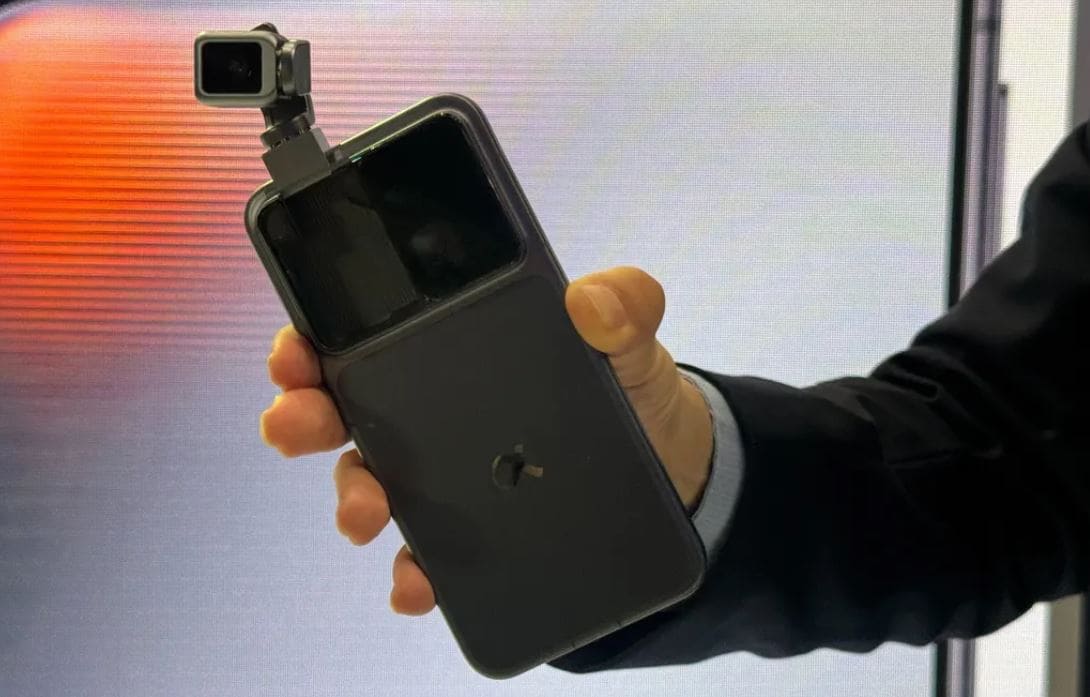
Honor Redefines Smartphones with a Built-In Robotic Camera
At Mobile World Congress this year, one device stood out — not because of a bigger screen or a faster processor, but because it literally moved. Honor unveiled what it calls a “Robot Phone,” and unlike most futuristic concepts that never leave the prototype stage, this one actually works. Instead of relying only on software-based AI like most smartphones today, Honor has built a small robotic arm inside the phone itself. Hidden under a sliding back panel, the arm pops out when activated and carries a gimbal-mounted camera that can physically rotate and track you. It doesn’t just take photos — it follows you.
Now you can shoot with ease without additional accessories
Using AI object tracking, the camera locks onto a subject and keeps them in frame even if they move around or turn the device. In our demo, it tracked movement smoothly and reacted fast enough to feel natural rather than mechanical. It even analyzed appearance and gave contextual feedback, showing that the AI isn’t just seeing — it’s interpreting. This marks a shift in how AI is being integrated into smartphones. For years, AI upgrades have mainly improved software — better photo processing, smarter assistants, predictive typing. Honor is taking a different direction by redesigning the hardware itself to give AI physical presence. Engineering something like this inside a slim flagship phone isn’t easy. Space is limited, and adding motors usually means sacrificing battery or thickness. But Honor says it leveraged its experience building ultra-thin foldable phones to make it work. The micro motor inside the Robot Phone is significantly smaller than conventional designs, and it runs on the same advanced battery technology used in their foldables. The target audience is clear: content creators. Instead of carrying a phone and a separate stabilizer like a DJI Osmo Pocket, this device combines both into one. Honor is confident the camera quality will compete at a high level, especially with its 200-megapixel sensor and new stabilization features.
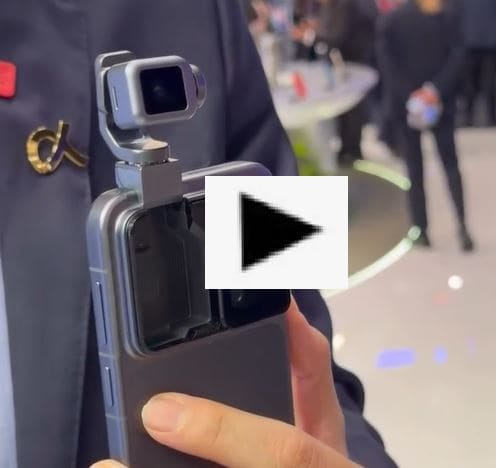
What makes this interesting isn’t just the moving camera. It’s the idea behind it. Smartphones have been evolving internally for years, but physically they’ve stayed mostly the same — flat slabs of glass. The Robot Phone suggests that the next phase of AI integration might not just be smarter software, but smarter hardware design. Whether this becomes mainstream or remains a niche device for creators remains to be seen. But one thing is clear: this is one of the first serious attempts to give AI a physical role inside a smartphone. And that alone makes it worth paying attention to.



User Comments
@marym-w2e
At this point to compare china to america is an insult to china....
@MonoYuki
I hope China keeps their robot technology safe from the greedy and warmongering west.
@Jili-r1b
As an Australian I am embarrassed by our media. Its so stupid they ask a Professor for "transformative media" rather an expert in robotics. Why don't they just have a football coach on while they are at it?
@llIIlllIIllllIIIIIlIIl
I w0uld visit ch1na a million times b4 i travel to u.s.a
@MultiDivebomber
Sanctioning China is the best things that could happen to China. It motivated to be self sufficient.
@wc7466
Nope, only western propaganda and Chinese excellence.
@TheSUGA1202
I feel safer knowing that communist china has kungfu robots tbh, in a world war i would just defect to their side and help them overtake my country and if my country makes mego to war i just rather be in jail or instigate a rebellion tbh.! Thank you! 🙏
@SlimJim3082
Next year, India's Golgotias university will introduce the kungfu robot 😎.
@isuruthiwanka2595
Western hypocrites hate to agree. Thank you! 🙏 for another great report!
@Mofo2008
Western people: please be fake, please be fake. 😂😂 Chinese: ... 👋🏼 Bye
@HieuTran-gl5cx
"The West has not promoted human development at all. They merely exploit their technological leadership to control the pace of progress at a minimum acceleration, then profiteer from it. Truly shameful."
@marlbankian
Excellent analysis site. Thank you! 😊 Thank you! ❤️